


WHITE RIVER JUNCTION, VT — Concepts NREC has released version 2026.2 of its Agile Engineering Design System® (AEDS®), introducing new AI-assisted engineering capabilities, expanded connections between design and analysis tools, and greater flexibility for complex machining operations.
AEDS is an integrated CAE and CAM platform specialized for turbomachinery, bringing design, analysis, and manufacturing programming into a single environment. The latest release helps engineers explore design options, reduce manual effort, and make more informed decisions from preliminary design through manufacturing.
Introducing AI-Assisted Engineering Workflows
Version 2026.2 introduces new Model Context Protocol (MCP) capabilities that allow engineers to interact with meanline design software and technical documentation through large language models (LLMs).
The new COMPAL MCP design server enables engineers to use natural language to interact directly with COMPAL®, Concepts NREC's meanline compressor design software. Through an LLM, users can establish designs, modify parameters, run calculations, and evaluate results while continuing to rely on COMPAL's physics-based solver for engineering calculations. This provides a new approach to exploring design options, automating repetitive tasks, and accessing engineering results.
Complementing this capability, the new engineering research assistant, Thea™, provides LLMs with structured access to Concepts NREC's CAE software documentation. Engineers can ask questions about parameters, modeling methods, and software functionality and receive contextual explanations grounded in Concepts NREC's technical documentation.
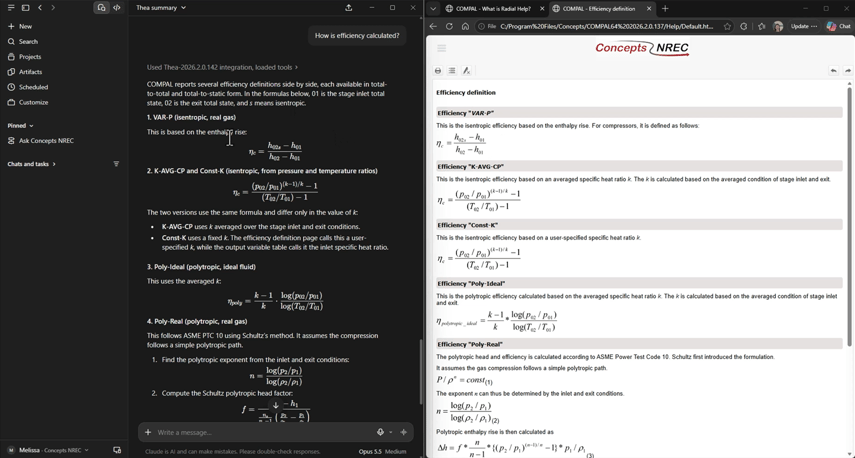 Thea™ AI-powered engineering research assistant shown in an LLM
Both tools connect to commercial and locally hosted LLMs, letting organizations decide how and where AI fits into their engineering workflows. These capabilities mark an initial step toward expanding AI-assisted functionality throughout the AEDS software suite.
Expanding Preliminary Design Capabilities
Previously introduced in beta, ParaScope™ provides engineers with a streamlined environment for preliminary pump sizing and scoping, helping them evaluate concepts before moving into meanline design.
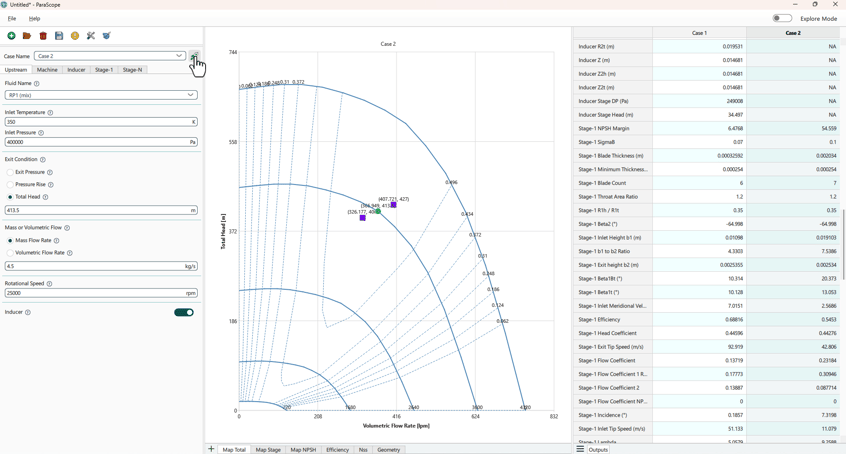 ParaScope™
With ParaScope™, engineers can define operating requirements, explore single- and multi-stage layouts, generate preliminary geometry, and evaluate estimated performance maps. This enables earlier assessment of pump feasibility and operating characteristics, helping engineers identify viable concepts before transferring them directly into PUMPAL® for more detailed modeling and optimization.
Enhancing CFD Analysis Capabilities
A new integration between AxCent® and Simcenter STAR-CCM+ provides engineers with an additional CFD analysis option within the AEDS workflow. As part of a recently announced technical partnership between Concepts NREC and Siemens, the integration enables engineers to transfer 3D turbomachinery geometry, meshing parameters, and boundary condition inputs from AxCent directly into Simcenter STAR-CCM+, reducing the need to manually recreate models for CFD analysis.
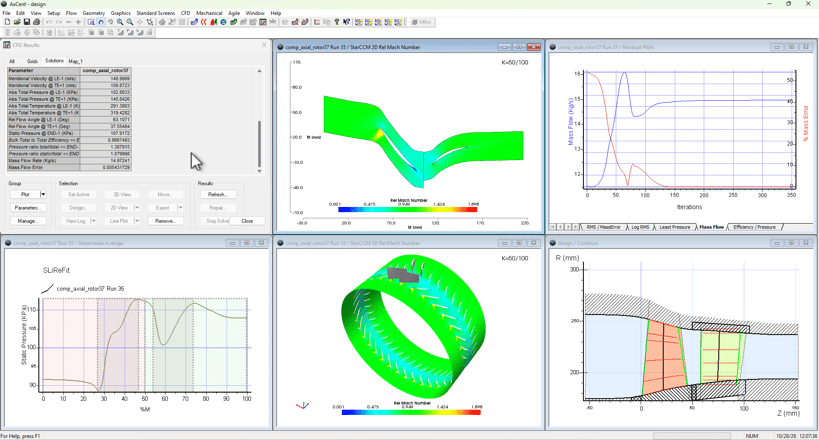
Simcenter STAR-CCM+ CFD analysis shown in AxCent®
Additionally, new automated CFD-calibrated loss modeling capabilities leverages the connection between throughflow analysis and higher-fidelity CFD simulations. Engineers can extract spanwise loss profiles from existing 3D CFD solutions and automatically calibrate throughflow loss models to better correlate with CFD predictions. By reducing the manual effort required to tune loss coefficients, this enhancement helps engineers apply higher-fidelity analysis results to faster, streamlined aerodynamic evaluations.
Expanded secondary leakage path outputs also provide greater visibility into leakage flows, cavity pressures, and thrust assessment supporting more comprehensive evaluations of machine performance.
“AI is creating new opportunities for how engineers interact with design software, but the value comes from connecting those capabilities to trusted engineering tools,” said Melissa Seib, Senior Product Manager, CAE Software at Concepts NREC. “With this release, we're introducing new ways for engineers to work with our software while continuing to strengthen the underlying design and analysis capabilities they depend on. Our focus is on giving engineers better tools to explore ideas, evaluate results, and make informed design decisions.”
Improving Rotordynamic Modeling and Analysis
Enhancements to ARMD, Concepts NREC's rotordynamics and bearing analysis software, enable engineers to model complex, stepped, and multi-layered rotor components directly, reducing the need for manual calculations of equivalent mass and inertia properties.
New multi-level modeling capabilities allow engineers to define components such as shrink-fit sleeves, stepped hubs, and concentric rings directly within the rotor model. The software automatically accounts for the mass distribution and inertia properties of these components, supporting more accurate representation of rotor assemblies in critical-speed, unbalance-response, and stability analyses.
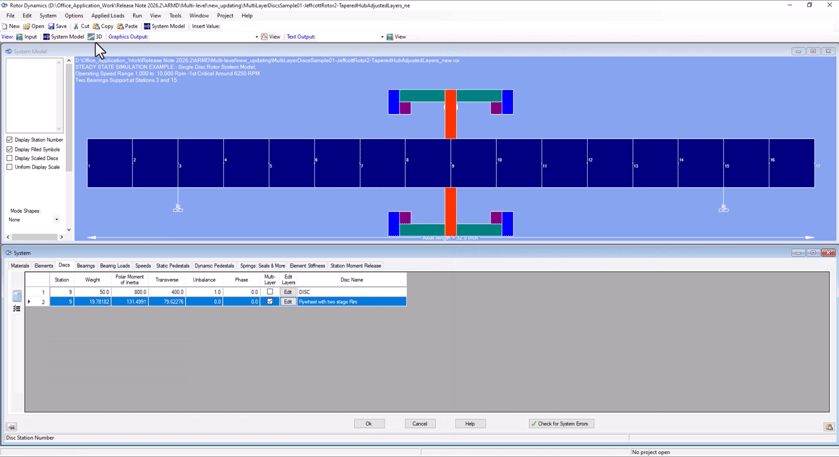 Multi-level modeling shown in ARMD
Greater Flexibility for Complex Fillet Machining
The 2026.2 release expands finishing capabilities in MAX-PAC™, Concepts NREC's CAM software for turbomachinery manufacturing, with new strategies and controls for machining complex fillet geometries.
A new distance-based fillet reduction strategy gives programmers greater control over pass spacing when machining compound fillets, helping maintain more consistent toolpath distribution across changing geometries. Additional zig-zag finishing patterns provide more options for tailoring machining strategies to specific part requirements.
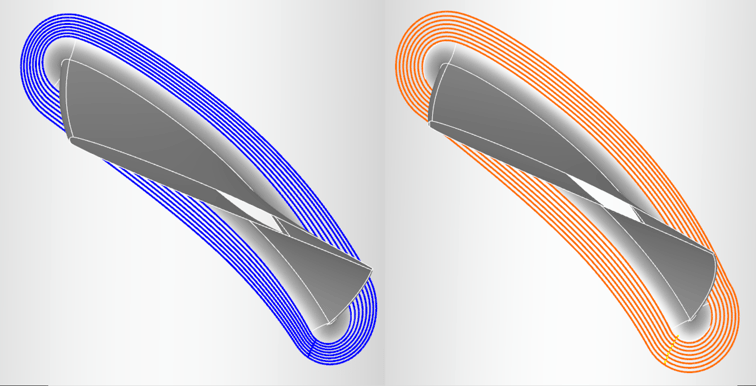 Distance-based fillet reduction shown in MAX-PACTM
For shrouded components, new feed-rate controls allow programmers to reduce cutting speeds selectively in corners while maintaining higher programmed feed rates where tool engagement permits. Together, these enhancements expand toolpath programming options while supporting efficient machining and consistent surface quality.
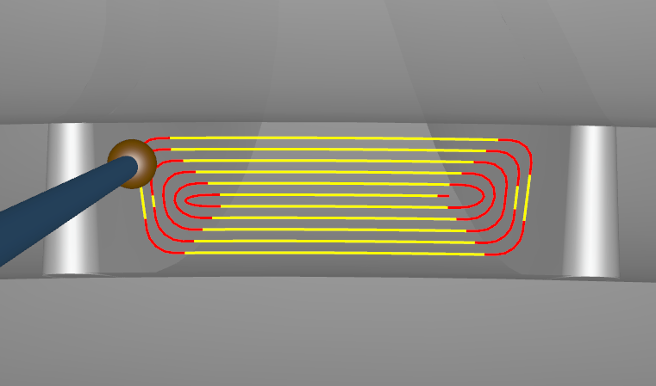 Feed rate controls shown in MAX-PACTM
“Programming complex turbomachinery components requires balancing machining efficiency with surface quality and process reliability,” said Ryan Lussier, Senior Product Manager, CAM Software at Concepts NREC. “The enhancements in MAX-PAC gives programmers more flexibility in how they approach challenging fillet geometries and greater control over cutting conditions. These are practical improvements that help programmers develop toolpaths suited to the geometry and machining requirements of each part.”
Availability
Version 2026.2 includes additional enhancements and updates across the AEDS software suite. A full list of new features and improvements is available in the software release notes.
Active Agile Product Support (APS) members can obtain version 2026.2 by contacting support@conceptsnrec.com.
To schedule a live demo or request a trial license, please contact info@conceptsnrec.com.
About Concepts NREC
Concepts NREC is the only independent company in the world with end-to-end capabilities to take turbomachinery products from concept to reality. For more than 65 years, Concepts NREC has been at the forefront of turbomachinery design and innovation, providing engineering services, design software, CAM software, precision manufacturing, assembly, testing, training, and installation. Headquartered in the USA, our mission is to provide the cutting-edge turbomachinery products, tools, and solutions the world needs for a sustainable future.
About the Agile Engineering Design System®
Concepts NREC’s Agile Engineering Design System® is a complementary suite of programs for Computer-Aided Engineering (CAE) and Computer-Aided Manufacturing (CAM) that covers the entire design process — from preliminary sizing through fluid dynamics and mechanical stress and vibration analysis. Final designs can be easily imported into our industry-leading CAM software, MAX-PAC™, to create efficient 5-axis machining strategies.