Turbomachinery Courses & Seminars
Each year, Concepts NREC offers an educational program with courses and seminars scheduled both in-person and online. Concepts NREC's policy of continuous improvement ensures that courses are completely up-to-date and appropriate for the needs of practicing turbomachinery engineers. Therefore, a course may differ in some details from the information provided here. Also note that new courses may be introduced as requested, and not all the courses will be offered annually.
2025 Course & Seminar Schedule
Centrifugal and Axial Pumps — Modern Design, Performance, and Problem Solving
October 13 - 17, 2025
daily 8:30 am - 4:30 pm EDT
White River Junction, VT USA or online
$3500
This course is designed to help engineers design, test, and run pumps and systems that are more efficient, more economical, and more reliable. Engineers will come to understand the best state-of-the-art design practices and learn the latest theories on performance, cavitation, dynamic forces, and noise. The course will review the latest advances in design tools and will provide expert and relevant instruction to designers on pump design optimization. Nearly half of all the teaching is focused on actual commercial design cases with measured data for confirmation.
The course begins with an extensive survey of the current technology base for pump design, covering impellers, diffusers, volutes, and other flow elements. The limitations on pump operation and range, due to stall and other instabilities, are described. Special attention is given to problems and design issues specifically associated with pump flows, namely, cavitation, unsteady flow, and vibration. The analysis of stress and vibration in centrifugal pumps will be covered in detail.
Emphasis is placed on modern methods available to the pump designer for blade layout and design, using flexible geometric techniques associated with hydrodynamic loading calculations and the computational fluid dynamic (CFD) analysis of pump flows. The advantages and limitations of such analyses are reviewed thoroughly by the instructor.
What You Will Learn
- Where the pump design process begins
- What the trade-offs are in any design process
- What challenges face today’s pump designers, as related to fluid dynamics, mechanical behavior of pump operation, and performance legislation
- How to redesign for improved product competitiveness
- How modern design techniques can improve performance and reduce engineering costs
- How to interpret performance data
- How advanced computer software can be used to improve the process of pump design and selection
- What unusual pump performance problems are being studied today
- How to effectively use CFD in modern design
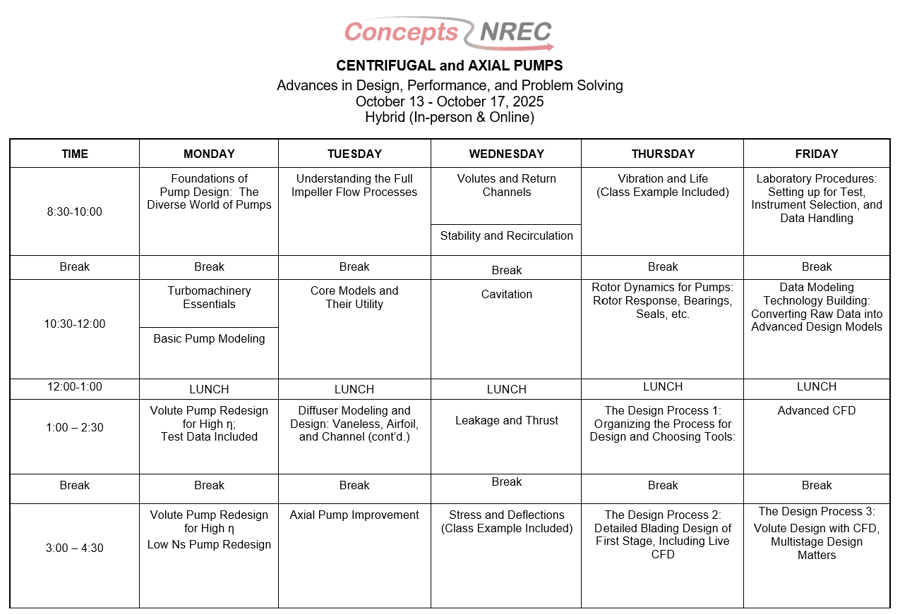
Schedule
Materials
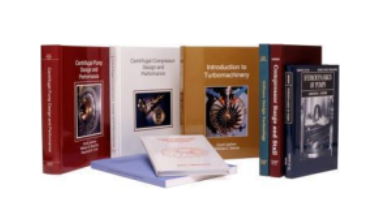
Participants receive a copy of Centrifugal Pump Design and Performance by David Japikse. This textbook is a durable reference of lasting value to all pump engineers and will be used in the course. Please be sure to include your current shipping address for fastest delivery. If you already own this book, let us know at registration and we will subtract the cost.
Lead Instructor
Dr. David Japikse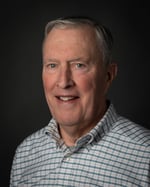
Dr. Japikse is the CEO and Founder of Concepts NREC, the world’s leading full-service turbomachinery design and development organization. Dr. Japikse received his B.S. in Engineering from Case Institute of Technology, his M.Sc. and Ph.D. Degrees in Mechanical Engineering at Purdue University and conducted post-doctoral research as a Fulbright Scholar/NSF Fellow at the Technische Hochschule in Aachen, Germany. He has received extensive recognition for his work in the design of pumps, compressors, and turbines, as well as the development of design tools.
A recipient of the 2010 Henry R. Worthington Medal for eminent achievement in pumping machinery, as well as other prestigious awards, he is also an elected member of the National Academy of Engineering and the Vermont Academy of Science and Engineering. Dr. Japikse has also authored/edited ten books and written/presented 300+ reports on turbomachinery design and development.
Other guest lecturers will also present on specific topics throughout the week.
Rotordynamics & Bearing Technologies Fall Seminar
November 3-7, 2025
Daily 09:00 - 17:00 UTC+1 CET
Frankfurt, Germany or online
$900-2995
This 5-part series is designed for engineers and technical managers who are involved in rotating machinery design, operation, maintenance, diagnostics, and troubleshooting, with emphasis on bearings and bearings systems, machinery rotor dynamics, and drive train torsional vibration.
The seminar in full provides detailed coverage of the field of fluid-film bearings and rotor dynamics including the presentation of case histories and the application of advanced software for modeling, analyses, and troubleshooting real-life bearing systems and vibration problems encountered in rotating equipment.
✔️ No previous experience is required.
✔️ Participants are encouraged to present real-world problems to be discussed.
✔️ Each student receives a certification of completion reflecting earned professional development hours.
Flexible registration fee schedule
- 1 day = $ 900
- 2 days = $1650
- 3 days = $2200
- 4 days = $2650
- 5 days = $2,995 ( In-person Only)
DAY 1 FLUID-FILM BEARINGS
Monday, Nov. 3 will focus on fluid-film bearings, the vital tribological element of rotating machinery, beginning with their fundamental principles of operation through computer-implemented evaluations of their operational performance characteristics and limitations. Design considerations and applications of fluid-film bearings will be discussed along with the presentation of numerous real-life case histories to illustrate the technology and its application to rotating machinery failure analysis and troubleshooting of common as well as unique vibration problems.
DAY 2 ROTOR DYNAMICS, PART 1
Tuesday, November 4 will focus on rotordynamics. The interacting influence of bearings on the dynamic behavior of rotating machinery will be reviewed and illustrated by the construction of analytical models and evaluated by computerized solutions. Participants are encouraged to present problems to be discussed. Informal technical sessions and workshops are intended to provide participants with adequate time to describe problems they have encountered in bearings, bearing systems, rotor dynamics, and torsional vibration.
DAY 3 ROTOR DYNAMICS, PART 2
Wednesday, November 5 will deal specifically with rotor dynamics as they occur in complete drivelines. Apart from model generation strategies, we present the basics of the analysis of excitability including the interpretation of vibration modes of the drive system. Examples show the steady-state or time-transient response signals generated by the calculations and in comparison with measurement signals.
DAY 4 TORSIONAL VIBRATIONS
Thursday, November 6 addresses torsional vibrations, including case studies and applications in rotating machinery supported by computer simulation methods. This course is recommended as an additional session to the previous days. Complete drivelines are analyzed and evaluated concerning excitability and response capability at specific stations (inertias) and elements (stiffnesses).
DAY 5 SOFTWARE WORKSHOP AND APPLIED EXAMPLES OF REAL-WORLD APPLICATIONS ( In-person Only)
Friday, November 7 offers a hands-on workshop using ARMD™ software with demonstration, training, and application to bearings, bearing systems, rotor dynamics, and torsional vibration modeling, analyses, and interpretation of generated results. We will create computer models, demonstrate how to run reasonable computations, and explain how to interpret the computer results. This training covers real industrial case studies.
 |
 |
About the Instructors
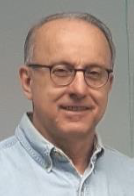
VICTOR K. OBEID has over 35 years of experience in the fields of rotor dynamics, fluid-film and rolling-element bearings, machinery vibration, failure analysis, and troubleshooting.
He is a pioneer in the development and application of PC-based state-of-the-art computer-aided design software for predicting the dynamics of complex rotor-bearing systems. A former Staff Engineer at the Franklin Institute Research Laboratories and a technical leader at RBTS, he directs government and industry-sponsored projects involving the design, analysis, and troubleshooting of rotating machinery systems and their components. He has been instrumental in teaching and training in the fields of bearings and rotor dynamics, and their application to common as well as unique equipment design, operation, and failure analysis. He taught seminars and training sessions worldwide at rotating equipment OEM, end users, packagers, government agencies, and open seminars to machinery engineers.
Mr. Obeid holds a Bachelor's degree from Drexel University and a Master of Science degree from Penn State University, both in Mechanical Engineering, as well as numerous US & Canadian patents on bearing designs & machinery elements.
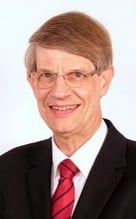 DR. ANDREAS LASCHET has more than 40 years of experience in the area of torsional vibrations and has been a teaching partner for this seminar since 2004. As part of his consultation services, Dr. Laschet has carefully investigated CAE methods and simulation algorithms for creating torsional vibration models of complete drivelines and performed detailed studies to verify computer results with measurements.
Dr. Laschet has published more than 60 technical papers and given numerous lectures at international conferences such as VDI, HDT, EFRC, ASME, and SAE. He studied Mechanical Engineering at the University of Technology in Aachen and carried out research work in the field of machine dynamics as a scientific assistant at the Institute of Machine Elements. His thesis "Development of a method for the computer supported simulation of torsional vibrations in drive systems" was published in 1988 as a Springer book “Simulation of the Dynamic Behaviour of Drive Systems” (in German language).
 THOMAS GRESHAM has extensive experience in delivering structural analysis, rotordynamics, bearing analysis, seal design, and test planning in addition to teaching sections for Concepts NREC’s advanced turbomachinery engineering training courses.
He brings additional compressor design and rotordynamics engineering experience from his roles as a Compressor Design Engineer at Daikin Applied, a Rotordynamics Engineer at Xdot Engineering & Analysis, and as a Rotordynamics Engineer at Pratt & Whitney in Connecticut.
Mr. Gresham holds B.S. and M.S. degrees in Mechanical Engineering from the University of Virginia, specializing in rotordynamics and vibrations.
Turbine Design and Analysis
November 4 - 6, 2025
daily 8:30am - 4:30pm EST
White River Junction, VT USA or online
$2100
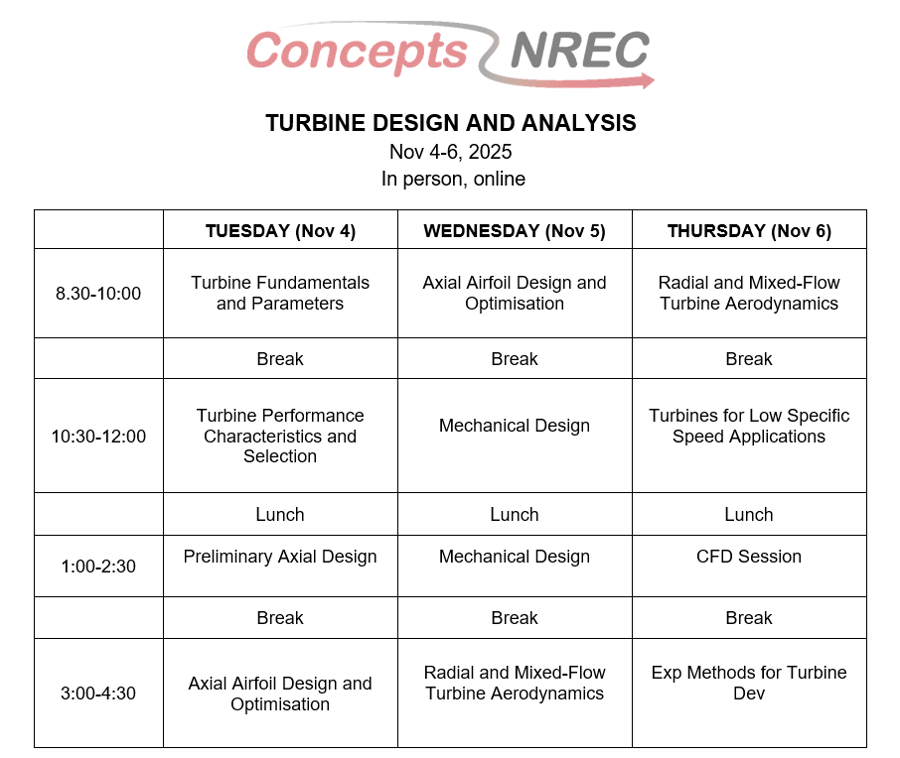
This course covers the selection, design and analysis of turbines. Thermodynamic requirements are discussed, then methods for choosing the right turbine for the application are described, followed by a look into preliminary design and design optimization tools. Aerodynamic design features and methods of achieving high efficiency, life assessment, durability, and the causes of failure in both axial and radial stages, are taught, as well as state-of-the-art methods of numerical optimization, and the process for productionizing a turbine.
Materials
Participants receive a copy of Axial and Radial Turbines written by Hany Moustapha, Mark F. Zelesky, Dr. Nicholas C. Baines, and Dr. David Japikse. This textbook will be used in the course. Please be sure to include your current shipping address for fastest delivery. If you already own this book, let us know at registration and we will subtract the cost.
Course Schedule
Instructors
Mark Anderson
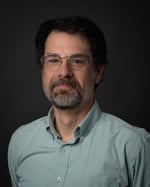 Mark Anderson is the Chief Technology Officer at Concepts NREC. He has 30+ years of experience in turbomachinery design and fluid modeling. He earned his B.S. in Mechanical Engineering from Northeastern University and an M.A. from the Massachusetts Institute of Technology. Mr. Anderson has conducted a wide range of research in the areas of hypersonic propulsion, turbomachinery modeling, and computational fluid dynamics. He spearheaded Concepts NREC’s meanline development, geometry parameterization, and quasi-3D and full 3D CFD at Concepts NREC and was Vice President of Software Development for 10 years. He has authored or co-authored over 25 papers on turbomachinery, CFD, and environmental modeling.
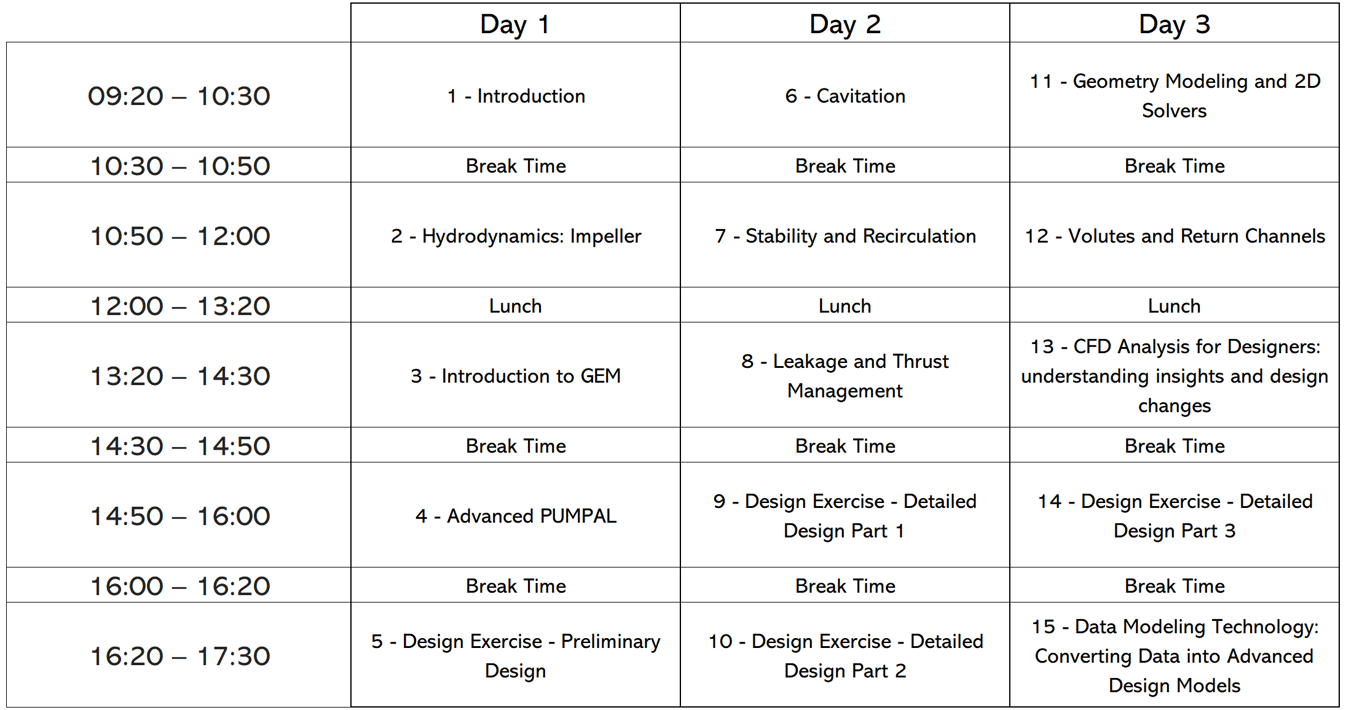
2025 Concepts NREC Turbo Pump Training
Date: December 15 (Mon) – December 17 (Wed), 2025
Location: DCC(Daejeon Convention Center Room 210) - 107 Expo-ro, Yuseong-gu, Daejeon, 34125 https://maps.app.goo.gl/8ua6xTen21cDBePY6
Registration
Please reach out to Ryan at our Channel Partner UIT for more information and to sign up to the event.
2026 Course & Seminar Schedule
Rotordynamics & Bearing Technologies Spring Seminar
May 4 - 7, 2026
Daily 8:30am-5pm EDT
White River Junction, VT USA or online
$795-$2295
This 4-part series is designed for engineers and technical managers who are involved in rotating machinery design, operation, maintenance, diagnostics, and troubleshooting, with emphasis on bearings and bearings systems, machinery rotor dynamics, and drive train torsional vibration.
✔️ No previous experience is required.
✔️ Participants are encouraged to present real-world problems to be discussed.
✔️ Each student receives a certification of completion reflecting earned professional development hours.
Flexible registration fee schedule
-
- 1 day = $795
- 2 days = $1495
- 3 days = $2095
- 4 days = $2295
DAY 1 FLUID-FILM BEARINGS
Monday, May 4 will focus on bearings, the vital tribological element of rotating machinery, beginning with their fundamental principles of operation through computer-implemented evaluations of their operational performance characteristics and limitations. Design considerations and applications of fluid-film bearings will be discussed along with the presentation of numerous real-life case histories to illustrate the technology and its application to rotating machinery failure analysis and troubleshooting of common, as well as, unique vibration problems. Following fluid-film bearings, an introduction to rolling element bearings will be presented illustrating their various applications and their effects on system rotor dynamics.
DAYS 2 & 3 ROTOR DYNAMICS & TORSIONAL VIBRATION
Tuesday & Wednesday, May 5 - 6 will focus on rotating machinery dynamics (rotor dynamics & torsional vibration). The interacting influence of bearings on the dynamic behavior of machinery will be reviewed and illustrated by the construction of analytical models, and evaluated by computerized solutions. Participants are encouraged to present problems to be discussed. Informal technical sessions and workshops are intended to provide participants with adequate time to describe problems they have encountered in bearings, bearing systems, rotor dynamics, and torsional vibration.
DAY 4 ARMD SOFTWARE WORKSHOP AND APPLIED EXAMPLES OF REAL-WORLD APPLICATIONS
Thursday, May 7 will provide expert-level ARMD™ software demonstration, training, and application to bearings, bearing systems, rotor dynamics, and torsional vibration modeling, analyses, and interpretation of generated results. Participants can bring their own rotating machinery and bearings problems to be presented and discussed in an open session, watch a problem development and solution, or use the software and create their own models and perform the analysis of their interest. Time will be allocated to discuss FAQs and details of the ARMD software.
Participants will have access to the Advanced Rotating Machinery Dynamics software package ARMD™ at the seminars for problem-solving and for the application of state-of-the-art computer-aided engineering of bearings and rotor dynamics.
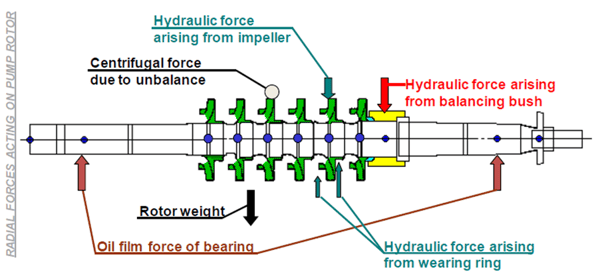
Representative rotating assembly illustrating various applied radial forces
INSTRUCTORS
VICTOR K. OBEID has over 35 years of experience in the fields of rotor dynamics, fluid-film and rolling-element bearings, machinery vibration, failure analysis, and troubleshooting.
He is a pioneer in the development and application of PC-based state-of-the-art computer-aided design software for predicting the dynamics of complex rotor-bearing systems. A former Staff Engineer at the Franklin Institute Research Laboratories and a technical leader at RBTS, he directs government and industry-sponsored projects involving the design, analysis, and troubleshooting of rotating machinery systems and their components.
He has been instrumental in teaching and training in the fields of bearings and rotor dynamics, and their application to common as well as unique equipment design, operation, and failure analysis. He taught seminars and training sessions worldwide at rotating equipment OEM, end users, packagers, government agencies, and open seminars to machinery engineers.
Mr. Obeid holds a Bachelor's degree from Drexel University and a Master of Science degree from Penn State University, both in Mechanical Engineering. He holds numerous US & Canadian patents on bearing designs & machinery elements.
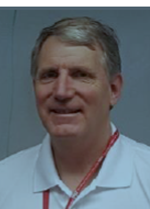 CHARLES W. YEISER has over 30 years of experience in the technical evaluation of structural and rotating machinery dynamics that encompasses application, design, software development, systems evaluation, failure analysis, and troubleshooting.
He has extensive experience in developing linear and non-linear finite element and specialized fluid-film/rolling-element bearing applications, which included structural deformation and heat transfer. For more than 20 years he has developed and successfully applied advanced computational techniques to evaluate torsional vibrations in hundreds of mechanical drive systems.
Mr. Yeiser holds a Bachelor of Arts in Physics from Franklin & Marshall College, as well as Bachelor and Master of Science degrees in Engineering from the University of Pennsylvania.
Centrifugal Compressors - Improving Design for Better Performance & Cost
White River Junction, VT USA or online
$3500
Detailed understanding of the aerodynamic behavior and structural integrity of centrifugal compressors is essential to meet competitive market needs. The student will learn the basic phenomena occurring in inlets, impellers, diffusers, volutes, and return channels. The entire development and design process from 1D to 3D viscous methods is taught with live examples while stressing preliminary cycle work, velocity triangle optimization, blade loading considerations, viscous flow-field analysis, and structural analysis. Special emphasis is placed on surge, choke, design methodology, laboratory development, and model development. Students work a sample evaluation problem, and all lectures are given by internationally renowned authorities.
A major advance in understanding has been achieved in the Diffuser Consortium; the impact on stage distortion and possible effects on the design process will be discussed. Grooved covers (Patent no. 8,926,276 B2) and Super Diffusers will also be mentioned as part of the changing fabric of compressor design and performance.
Program Overview
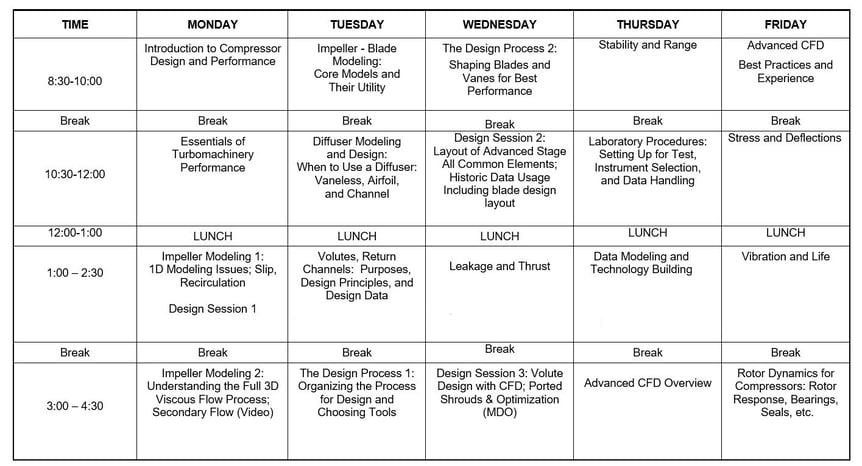
Introduction to Centrifugal Compressors Impeller Flow Analysis
- Introduction to impeller flows
- Secondary flows
- Impeller modeling and design possibilities
- Impeller exit velocity profiles
- Loss analysis
Diffuser Design
- The role of the diffuser in compressor performance
- Vaneless diffusers
- Cascade (airfoil) diffusers
- Channel (wedge) diffusers
- Design applications and modeling
Stress and Vibration Analysis
- Causes of failure
- Blade and hub steady stresses
- Creep
- Fatigue failure
- Life estimation
Additional Stage Components
- The compressor inlet
- Volute
- Collector
- Return channel
Stability and Range
- Review of steady stall
- Rotating stall in centrifugal compressors
- Surge
- Range extension and variable geometry
Systematic Design and Optimization
- Design overview
- Design optimization strategies
- Design tools: meanline, blade generation, and CFD
Experimental Development
- The reasons for testing
- Designing a test program
- Compressor test facilities
- Power and efficiency measurement
- Instrumentation
Design Examples
A selection of centrifugal compressor design examples will be used to illustrate the various steps in the design process, including meanline design and analysis, impeller blade design, rapid loading and streamline curvature analysis, and CFD analysis.
What You Will Learn
This course provides a comprehensive survey of the design and analysis of centrifugal compressors. The objective of the course is to provide participants with:
- An overview and familiarization of the design and operation of the complete machine, and individual components of the machine
- A guide to the technology database that underpins and guides all design and analysis procedures
- A familiarization of the best design practices at all levels, from basic machine selection to the detailed aerodynamic and mechanical design of all components
- A guide to the different types of computer-based analysis tools available, and the applicability of each
- An exposure to state-of-the-art design practices
- An understanding of how to achieve the best compromises between efficiency, range, cost, life, and durability.
This course has been taught for more than 39 years, and many hundreds of engineers in the compressor industries have benefited from it. During that time it has been continuously revised to reflect the latest understanding and best practices, including examples of actual design practice. Special emphasis is placed on impeller and diffuser interaction and design as a result of recent investigations. A recent innovation is to include examples of actual design practice. Attendees will observe, discuss, and participate in real-time design examples guided by the instructors, taking specifications and developing compressor designs to the point where prototype machines can be manufactured and tested.
Schedule
Materials
The course materials have been developed over many years and are regularly reviewed to ensure that they are kept up to date. Course fee includes the textbook, Centrifugal Compressor Design and Performance, written by Dr. David Japikse. If you already have the book, let us know at registration and we will subtract the cost from your fee.
Instructors
Dr. David Japikse
Dr. Japikse is the CEO and Founder of Concepts NREC, the world’s leading full-service turbomachinery design and development organization. Dr. Japikse received his B.S. in Engineering from Case Institute of Technology, his M.Sc. and Ph.D. Degrees in Mechanical Engineering at Purdue University and conducted post-doctoral research as a Fulbright Scholar/NSF Fellow at Technische Hochschule in Aachen, Germany. He has received extensive recognition for his work in the design of pumps, compressors, and turbines, as well as the development of design tools.
A recipient of the 2010 Henry R. Worthington Medal for eminent achievement in pumping machinery, as well as other prestigious awards, he is also an elected member of the National Academy of Engineering and the Vermont Academy of Science and Engineering. Dr. Japikse has also authored/edited ten books and written/presented 300+ reports on turbomachinery design and development.
Other guest lecturers will also present on specific topics throughout the week.
Centrifugal and Axial Pumps — Modern Design, Performance, and Problem Solving
White River Junction, VT USA or online
$3500
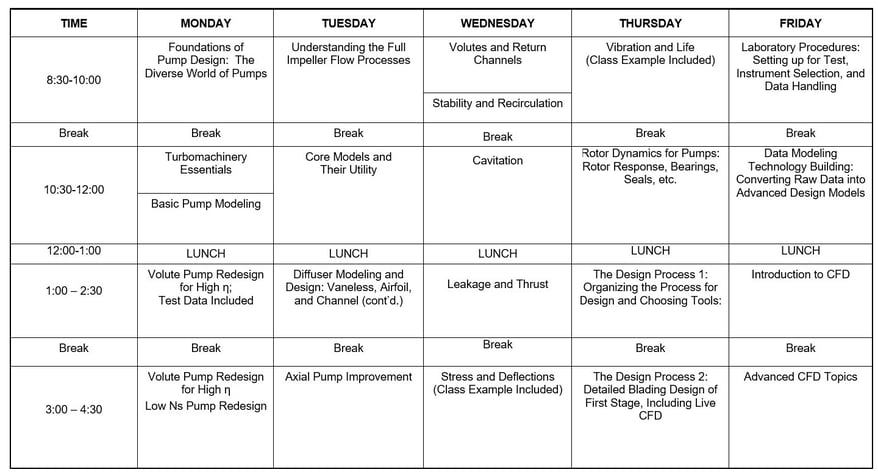
This course is designed to help engineers design, test, and run pumps and systems that are more efficient, more economical, and more reliable. Engineers will come to understand the best state-of-the-art design practices and learn the latest theories on performance, cavitation, dynamic forces, and noise. The course will review the latest advances in design tools and will provide expert and relevant instruction to designers on pump design optimization. Nearly half of all the teaching is focused on actual commercial design cases with measured data for confirmation.
The course begins with an extensive survey of the current technology base for pump design, covering impellers, diffusers, volutes, and other flow elements. The limitations on pump operation and range, due to stall and other instabilities, are described. Special attention is given to problems and design issues specifically associated with pump flows, namely, cavitation, unsteady flow, and vibration. The analysis of stress and vibration in centrifugal pumps will be covered in detail.
Emphasis is placed on modern methods available to the pump designer for blade layout and design, using flexible geometric techniques associated with hydrodynamic loading calculations and the computational fluid dynamic (CFD) analysis of pump flows. The advantages and limitations of such analyses are reviewed thoroughly by the instructor.
What You Will Learn
- Where the pump design process begins
- What the trade-offs are in any design process
- What challenges face today’s pump designers, as related to fluid dynamics, mechanical behavior of pump operation, and performance legislation
- How to redesign for improved product competitiveness
- How modern design techniques can improve performance and reduce engineering costs
- How to interpret performance data
- How advanced computer software can be used to improve the process of pump design and selection
- What unusual pump performance problems are being studied today
- How to effectively use CFD in modern design
Schedule
Materials
Participants receive a copy of Centrifugal Pump Design and Performance by David Japikse. This textbook is a durable reference of lasting value to all pump engineers and will be used in the course. Please be sure to include your current shipping address for fastest delivery. If you already own this book, let us know at registration and we will subtract the cost.
Lead Instructor
Dr. David Japikse
Dr. Japikse is the CEO and Founder of Concepts NREC, the world’s leading full-service turbomachinery design and development organization. Dr. Japikse received his B.S. in Engineering from Case Institute of Technology, his M.Sc. and Ph.D. Degrees in Mechanical Engineering at Purdue University and conducted post-doctoral research as a Fulbright Scholar/NSF Fellow at the Technische Hochschule in Aachen, Germany. He has received extensive recognition for his work in the design of pumps, compressors, and turbines, as well as the development of design tools.
A recipient of the 2010 Henry R. Worthington Medal for eminent achievement in pumping machinery, as well as other prestigious awards, he is also an elected member of the National Academy of Engineering and the Vermont Academy of Science and Engineering. Dr. Japikse has also authored/edited ten books and written/presented 300+ reports on turbomachinery design and development.
Other guest lecturers will also present on specific topics throughout the week.
Rotordynamics & Bearing Technologies Fall Seminar
October 26 - 30, 2026
Daily 09:00 - 17:00 UTC+1 CET
Frankfurt, Germany or online
$900-2995
Click here for the full brochure, and housing links
This 5-part series is designed for engineers and technical managers who are involved in rotating machinery design, operation, maintenance, diagnostics, and troubleshooting, with emphasis on bearings and bearings systems, machinery rotor dynamics, and drive train torsional vibration.
The seminar in full provides detailed coverage of the field of fluid-film bearings and rotor dynamics including the presentation of case histories and the application of advanced software for modeling, analyses, and troubleshooting real-life bearing systems and vibration problems encountered in rotating equipment.
✔️ No previous experience is required.
✔️ Participants are encouraged to present real-world problems to be discussed.
✔️ Each student receives a certification of completion reflecting earned professional development hours.
Flexible registration fee schedule
- 1 day = $900
- 2 days = $1650
- 3 days = $2200
- 4 days = $2650
- 5 days = $2995 (In-person Only)
DAY 1 FLUID-FILM BEARINGS
Monday, Oct. 26 will focus on fluid-film bearings, the vital tribological element of rotating machinery, beginning with their fundamental principles of operation through computer-implemented evaluations of their operational performance characteristics and limitations. Design considerations and applications of fluid-film bearings will be discussed along with the presentation of numerous real-life case histories to illustrate the technology and its application to rotating machinery failure analysis and troubleshooting of common as well as unique vibration problems.
DAY 2 ROTOR DYNAMICS, PART 1
Tuesday, Oct. 27 will focus on rotor dynamics part 1. The interacting influence of bearings on the dynamic behavior of rotating machinery will be reviewed and illustrated by the construction of analytical models and evaluated by computerized solutions. Participants are encouraged to present problems to be discussed. Informal technical sessions and workshops are intended to provide participants with adequate time to describe problems they have encountered in bearings, bearing systems, rotor dynamics, and torsional vibration.
DAY 3 ROTOR DYNAMICS, PART 2
Wednesday, Oct. 28 will deal specifically with rotor dynamics part 2 as they occur in complete drivelines. Apart from model generation strategies, we present the basics of the analysis of excitability including the interpretation of vibration modes of the drive system. Examples show the steady-state or time-transient response signals generated by the calculations and in comparison with measurement signals.
DAY 4 TORSIONAL VIBRATIONS
Thursday, Oct. 29 addresses torsional vibrations, including case studies and applications in rotating machinery supported by computer simulation methods. This course is recommended as an additional session to the previous days. Complete drivelines are analyzed and evaluated concerning excitability and response capability at specific stations (inertias) and elements (stiffnesses).
DAY 5 SOFTWARE WORKSHOP AND APPLIED EXAMPLES OF REAL-WORLD APPLICATIONS (In-person Only)
Friday, Oct. 30 offers a hands-on workshop using ARMD™ software with demonstration, training, and application to bearings, bearing systems, rotor dynamics, and torsional vibration modeling, analyses, and interpretation of generated results. We will create computer models, demonstrate how to run reasonable computations, and explain how to interpret the computer results. This training covers real industrial case studies.
|
|
About the Instructors

VICTOR K. OBEID has over 35 years of experience in the fields of rotor dynamics, fluid-film and rolling-element bearings, machinery vibration, failure analysis, and troubleshooting.
He is a pioneer in the development and application of PC-based state-of-the-art computer-aided design software for predicting the dynamics of complex rotor-bearing systems. A former Staff Engineer at the Franklin Institute Research Laboratories and a technical leader at RBTS, he directs government and industry-sponsored projects involving the design, analysis, and troubleshooting of rotating machinery systems and their components. He has been instrumental in teaching and training in the fields of bearings and rotor dynamics, and their application to common as well as unique equipment design, operation, and failure analysis. He taught seminars and training sessions worldwide at rotating equipment OEM, end users, packagers, government agencies, and open seminars to machinery engineers.
Mr. Obeid holds a Bachelor's degree from Drexel University and a Master of Science degree from Penn State University, both in Mechanical Engineering, as well as numerous US & Canadian patents on bearing designs & machinery elements.
 CHARLES W. YEISER has over 30 years of experience in the technical evaluation of structural and rotating machinery dynamics that encompasses application, design, software development, systems evaluation, failure analysis, and troubleshooting.
He has extensive experience in developing linear and non-linear finite element and specialized fluid-film/rolling-element bearing applications, which included structural deformation and heat transfer. For more than 20 years he has developed and successfully applied advanced computational techniques to evaluate torsional vibrations in hundreds of mechanical drive systems.
Mr. Yeiser holds a Bachelor of Arts in Physics from Franklin & Marshall College, as well as Bachelor and Master of Science degrees in Engineering from the University of Pennsylvania.
To request an invitation letter for visa application, please contact info@conceptsnrec.com.
Registration Fees
Registration fees are due at the time of purchase. Registering without payment does not reserve space. Fees include all course materials, typically including a downloadable syllabus and a textbook.
-
$200 may be deducted from the registration fee if payment is received three or more weeks prior to the course start date. Please apply discount code: EARLYREG.
-
If more than two participants from the same company are registered for the same course, deduct 25% for third and subsequent registrant’s fee(s). Please apply discount code: 3PLUS.
-
A full-time student can deduct 33% of the registration fee. Proof of student status is required. Please apply discount code: CNCOURSE_EDU.
- If you are a CAE APS member, and would like to redeem your 90% discount for one course per company per year, please apply discount code CNAPS90. Concepts NREC will verify APS membership, and will apply the discounted course to the first request we receive from the member company.
Rotordynamics & Bearing Technologies seminars do not qualify for discount.
Limit one code per transaction.
By submitting the registration form, you agree that you are registering for this course with the understanding that the lectures are presented live on Eastern Time business hours, and further agree to abide by all associated restrictions regarding the subject matter presented therein.
You will receive the course materials for download, however recordings are not provided to registrants and recording of the sessions by attendees is strictly prohibited.