Why Meanline Scripting is Becoming Essential for Turbomachinery Design
Manual meanline design can sometimes feel less like design and more like managing a chain of tiny decisions.


Most of the challenge in turbomachinery manufacturing doesn’t come from a single limitation; it comes from many small ones adding up.
A feature that’s difficult to reach. A toolpath that takes too long to recalculate. A process that works, but can’t be easily reused.
Individually, they’re manageable, but together they shape how parts get programmed and where time, risk, and inconsistency start to build.
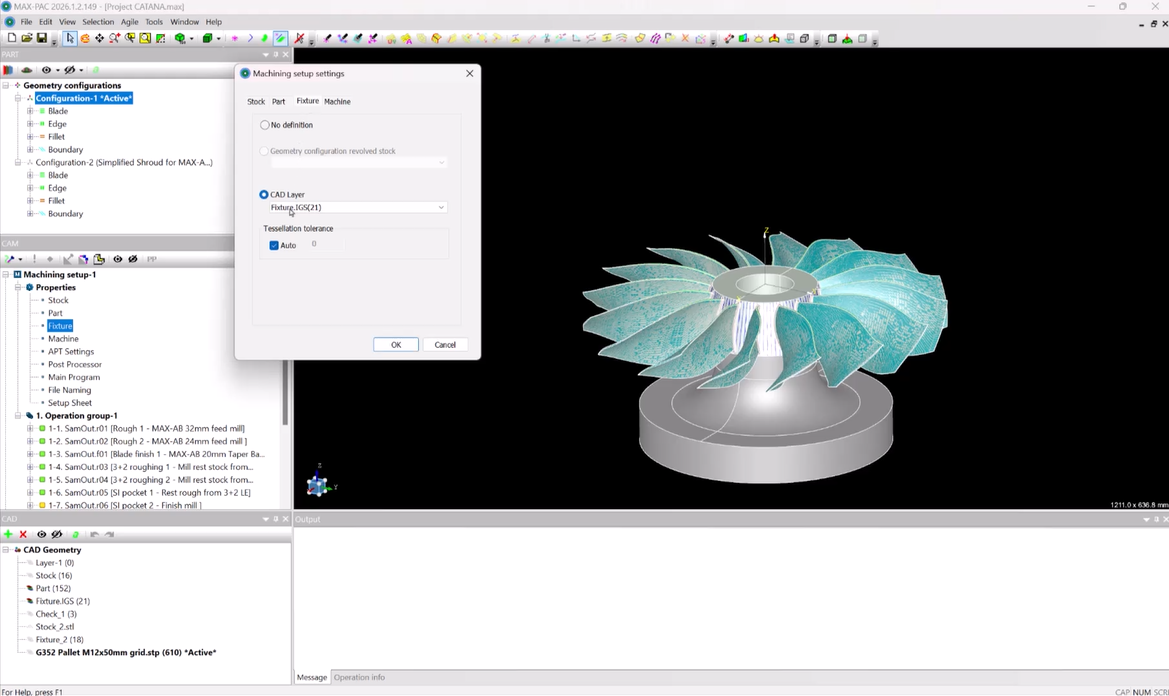
New capabilities in CAM software for turbomachinery are starting to remove that friction and reshape three critical parts of the machining workflow: how programmers access difficult geometry, how consistent surface finishing is achieved, and how processes are documented and reused.
The result is a programming process that’s easier to fine tune and repeat.
Certain features of turbomachinery components - undercuts, integrally shrouded impellers, or highly twisted airfoils to name a few - have historically required compromise.
Programmers rely on extra setups, manual toolpath adjustments, or approximations that don’t fully match the intended geometry. Each workaround introduces added time, variability, or risk.
New toolpath methods designed specifically for turbomachinery are addressing these limitations directly, making it possible to machine difficult-to-reach features with greater precision and control.
With undercutting support in 3+2 roughing operations, hard to reach areas are now more accessible using lollipop tools, disc cutters, and barrel tools. Increased access allows for more material removal in each tool orientation, reducing the need for repositioning and additional setups.
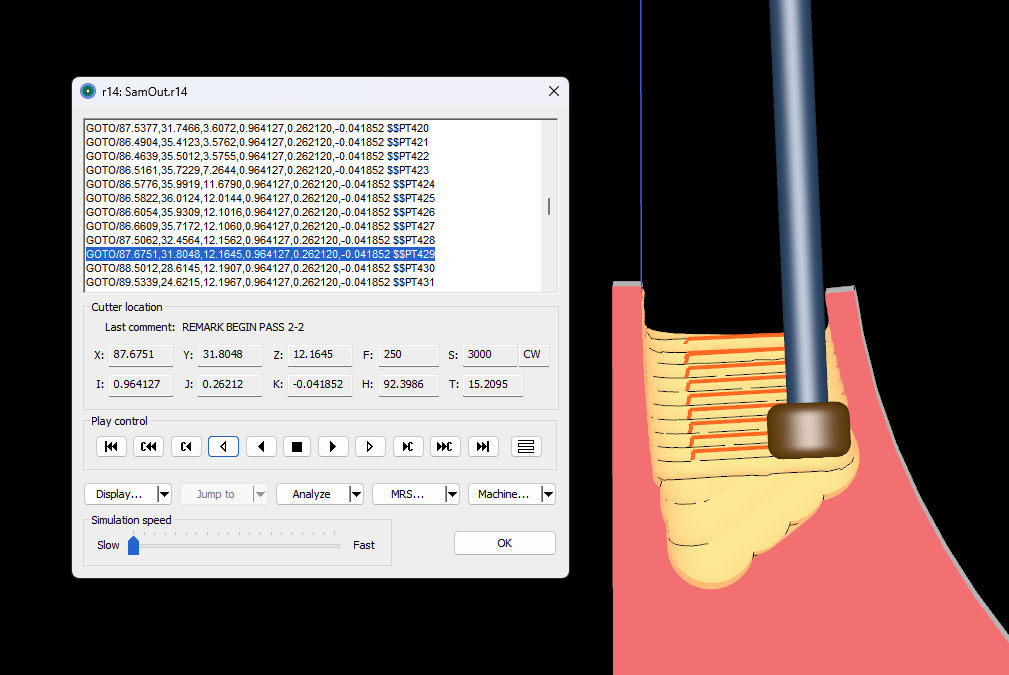
Spiral roughing makes it easier to machine single blades that have an integrated shroud or tailstock that prevents entering from the blade tip. Spiral roughing allows the tool to gradually ramp into the stock for more efficient material removal.
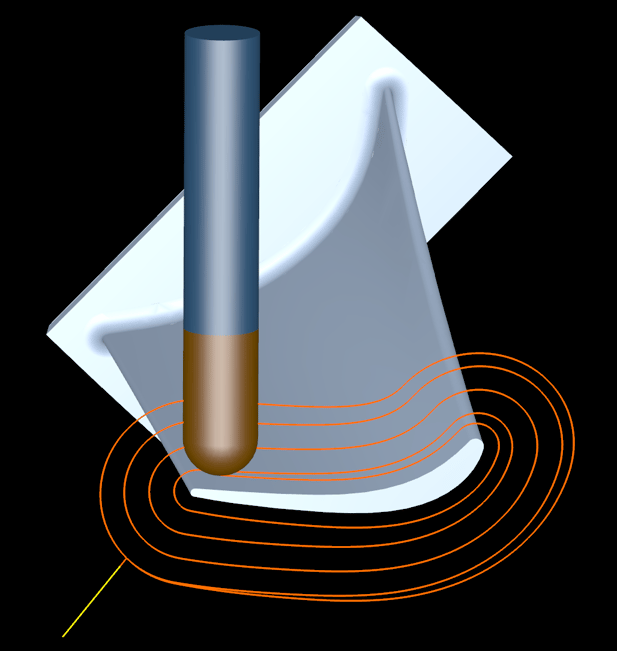
Toolpaths designed to work with challenging geometry reduce setup time and minimize manual intervention. The result is a more direct path from programing to a reliable machining outcome.
But solving tough geometry access is only part of the challenge. The next step is increasing how quickly programmers can refine and improve their approach before the part reaches the final machining step.
Inconsistent finishing at the blade-to-hub transition is a common challenge for manufacturing engineers and machinists.
At the leading edge in particular, fillet finishing toolpaths can leave behind cusps or visible mismatches where the blade and hub meet. Addressing these areas in manufacturing often requires additional passes or manual adjustments, adding time and variability to the process.
Updated toolpath methods for edge and blade finishing are designed to resolve this more directly. Cross-flow toolpaths can now extend through the fillet and onto the hub by a specified distance, creating a smooth transition from blade to hub.
By carrying the toolpath beyond the fillet, surface mismatches are reduced without requiring workarounds. The result is a cleaner surface finish at a critical point in the component, without additional setup or manual intervention.
Programming a part successfully doesn’t guarantee it can be reproduced efficiently, especially across teams, shifts, and facilities.
Without structured process documentation, critical decisions and context live in the programmer's memory or in disconnected notes that are hard to decipher. This makes handoffs difficult and often leads to rework, reprogramming, or - even more costly - scrapping parts altogether.
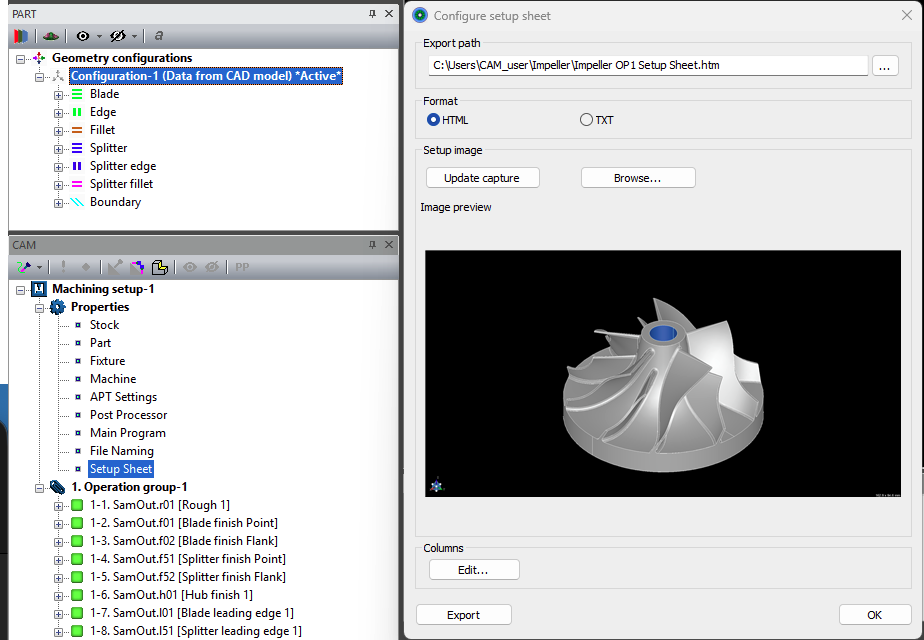
Built-in customizable process documentation within the CAM workflow captures both the steps taken and the reasoning behind them, in a format that stays connected to the toolpaths and machining strategy. For example, the ability to customize outputs - such as switching between HTML and TXT formats - helps standardize how processes are documented and shared. Just as importantly, when those settings are retained by the UI, it ensures consistent documentation output every time.
When documentation is embedded in the workflow, it becomes part of the process rather than an afterthought. Teams can reproduce results more consistently, transfer work more easily, and maintain a clear record for quality and compliance requirements.
Turbomachinery components aren’t getting any easier to program and manufacture, but CAM software capabilities are advancing to meet that challenge. Teams that focus on improving their machining processes are better positioned to move faster and deliver more consistent results.
As turbomachinery components continue to demand precision and complexity, the advantage shifts to teams that can program more efficiently, ensure consistent surface quality, and document more effectively.
The software isn’t just supporting the workflow, it’s actively shaping how manufacturing gets done.

Tags: Software, CAM Software
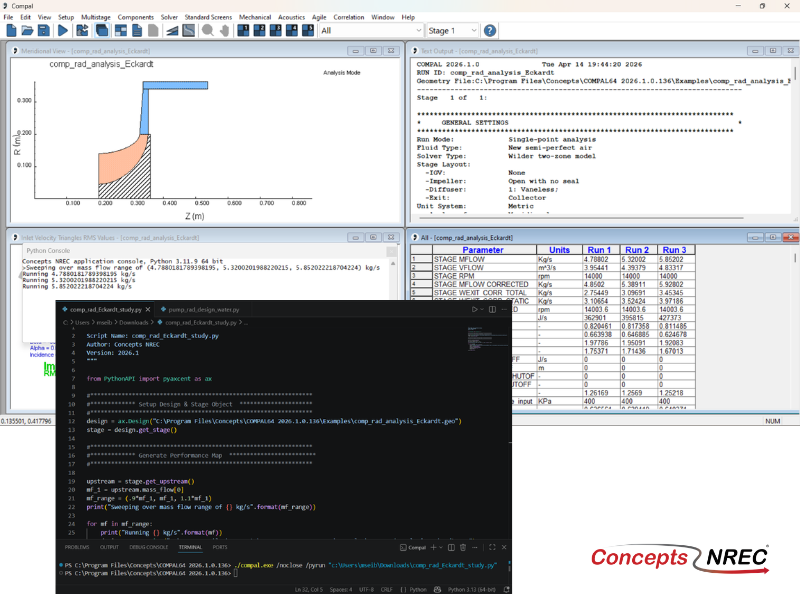
Manual meanline design can sometimes feel less like design and more like managing a chain of tiny decisions.
Most programmers have worked with a toolpath that looks reasonable at first but becomes increasingly difficult to manage as programming progresses. Besides being a hassle to deal with, unnecessarily...

For most turbomachinery engineers, optimization isn’t a new idea. It’s a critical part of their workflow that can’t be overlooked. But sometimes that crucial step isn’t easy to get to.