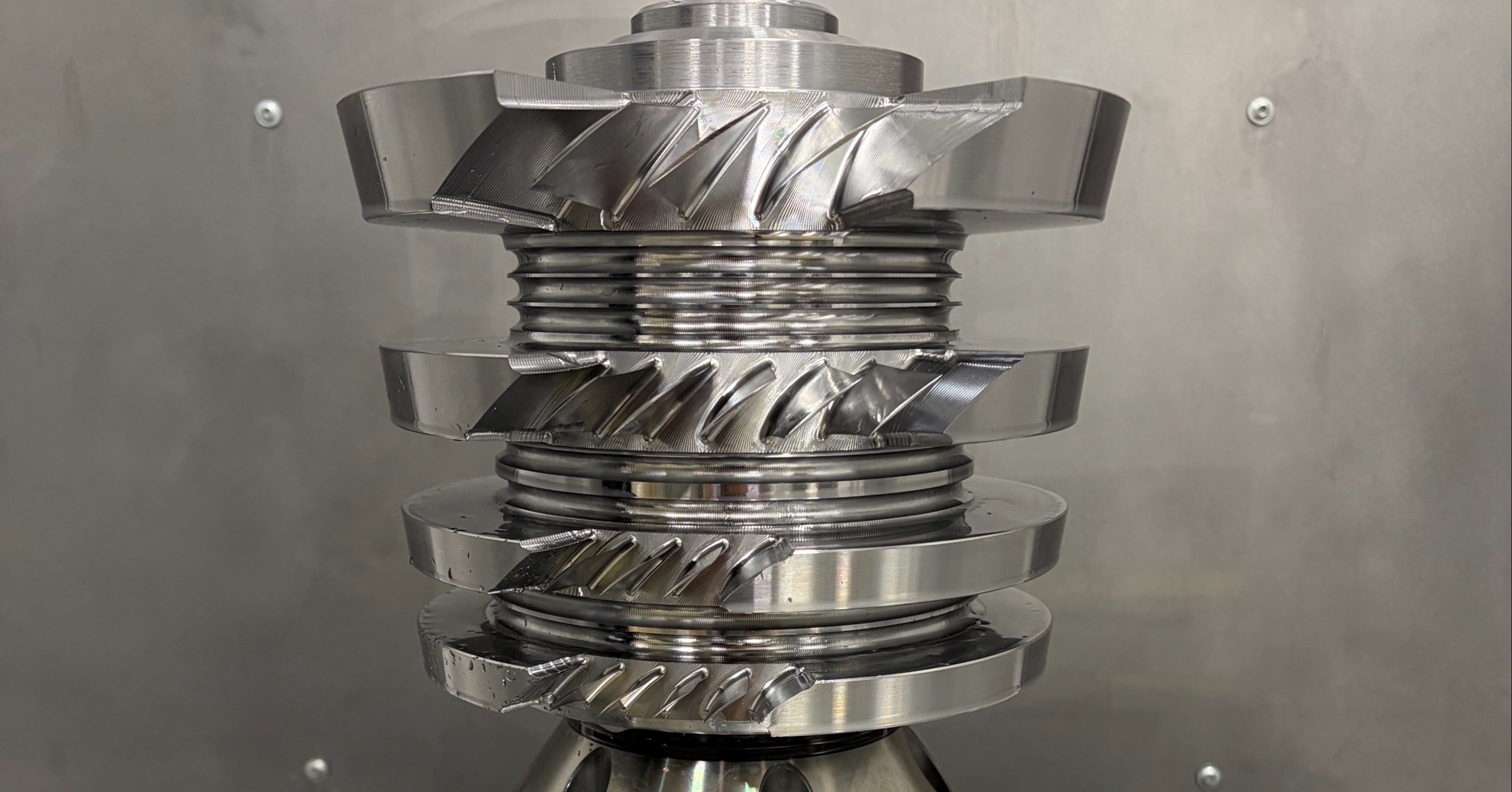
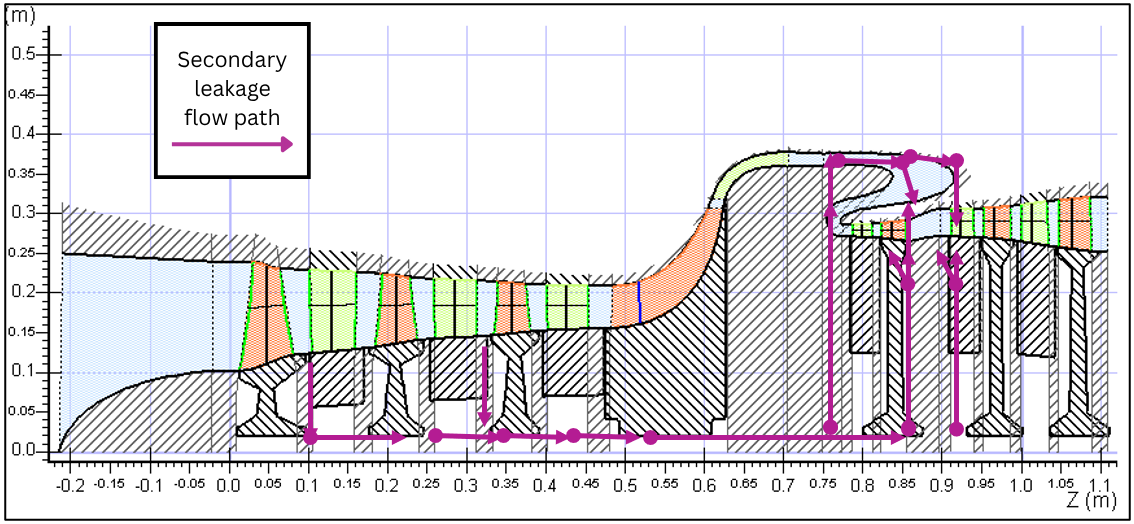
Machining turbomachinery components like impellers and blisks requires CNC programmers to balance machining efficiency with tight dimensional tolerances, demanding surface finish requirements, and complex blade geometries. In 5-axis machining, even small differences in how a toolpath is programmed can affect the time required to produce a finished part.
While cutting speeds and feed rates play an important role in machining cycle time, they are only part of the equation. Toolpath length, cutting engagement, tool orientation, and movement between cuts all influence how efficiently material is removed and how much time the machine spends completing each operation.
Understanding how these factors interact is essential to making informed toolpath decisions. From roughing strategies that influence material removal efficiency to finishing approaches that balance surface quality with the number of passes required, toolpath planning can have a significant impact on overall cycle time.
Why Toolpath Strategy Matters in 5-Axis Machining
In 5-axis machining, the toolpath determines more than where the cutting tool travels. It also influences how the tool engages with the material, how the machine's axes move throughout an operation, and how much time is spent cutting versus repositioning. These decisions directly affect machining cycle time, even when the finished geometry remains the same.
Two toolpaths programmed to machine the same component can have significantly different cycle times. Differences in cutting engagement, tool orientation, and movement between passes can affect how efficiently the machine completes an operation, making toolpath strategy an important consideration when looking to reduce machining time.
This becomes particularly important when machining complex turbomachinery components such as impellers and blisks. Curved blade surfaces, narrow flow passages, and varying tool accessibility introduce constraints that influence how cutting tools can approach and move through the material. As a result, programmers must account for both the component geometry and the machine's capabilities when developing an efficient toolpath.
Understanding how these factors influence machining time provides a foundation for developing roughing and finishing strategies that reduce cycle time while maintaining the required part quality.
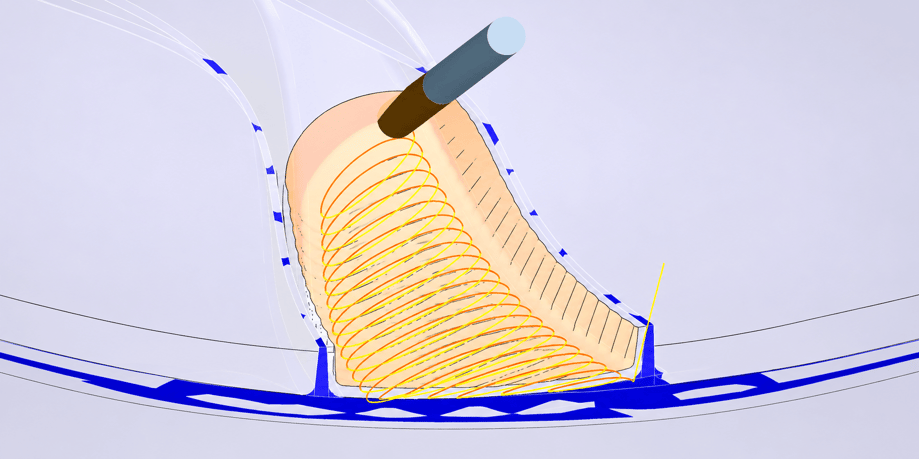 Example toolpath shown in MAX-PAC™
How Toolpath Movement and Cutting Engagement Affect Machining Time
The distance a cutting tool travels is one factor influencing machining cycle time, but the way it moves along that path is equally important. A shorter toolpath may appear more efficient, yet changes in cutting engagement, tool direction, and machine axis movement can affect how quickly the operation is completed.
Cutting engagement describes how the tool interacts with the material during machining. As engagement changes, so do the cutting forces acting on the tool. Significant variations in engagement can require more conservative cutting parameters to manage tool deflection, vibration, and tool wear. A toolpath designed to maintain more consistent engagement can support stable cutting conditions and potentially higher sustained feed rates, even if the overall cutting distance is longer.
Machine motion also plays an important role, particularly in simultaneous 5-axis machining. When machining curved blade surfaces or navigating narrow passages, frequent changes in direction or tool orientation can require the machine to accelerate, decelerate, or adjust its movement to remain within the machine's capabilities.
As a result, the actual feed rate achieved during machining may be lower than the programmed feed rate. A shorter toolpath with frequent directional changes or complex axis movements may take longer to execute than a smoother, more continuous path that allows the machine to maintain a consistent speed.
Movement between cuts also contributes to total cycle time. Retracts, repositioning moves, and transitions between machining passes consume time without directly removing material. While these movements may be necessary for tool clearance and safe machining, their frequency and duration can influence the efficiency of the overall operation.
Effective 5-axis toolpath optimization therefore requires considering more than cutting distance or programmed feed rates. How the tool engages with material, how the machine executes the programmed movements, and how much time is spent transitioning between cuts all contribute to the overall machining cycle.
Different Toolpath Considerations for Roughing and Finishing
Roughing and finishing operations have different objectives, and the toolpath strategies used for each can significantly influence machining cycle time. Roughing focuses on removing material efficiently while preparing the component for subsequent operations. Finishing prioritizes achieving the required surface geometry, dimensional accuracy, and surface quality. Optimizing cycle time requires understanding how toolpath decisions affect both stages.
Roughing Strategies for Material Removal Efficiency
During roughing, the goal is to remove large volumes of material while maintaining stable cutting conditions. The way a tool engages with the material influences the cutting parameters that can be used and, consequently, the time required to complete the operation.
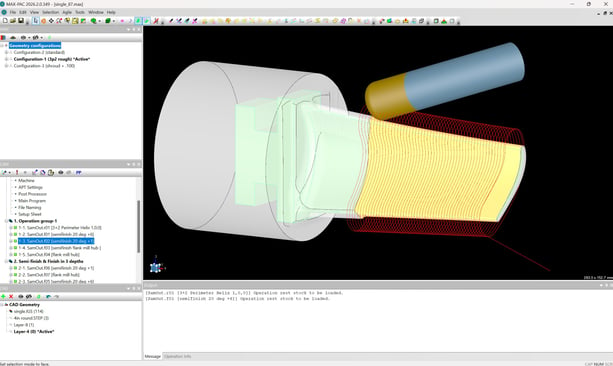
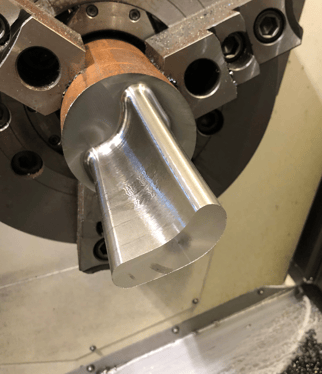
Finishing example shown in MAX-PAC™ (left) and the corresponding machined component (right)
Traditional slotting operations can involve high radial engagement, placing significant loads on the cutting tool and potentially requiring more conservative cutting parameters. Alternative strategies, such as high-efficiency milling (HEM) and trochoidal milling, use different toolpath patterns to manage cutting engagement more consistently.
For example, trochoidal milling uses looping tool movements to control radial engagement rather than cutting across the full slot width continuously. Although this approach can increase the distance traveled by the cutting tool, it can also help maintain more consistent cutting engagement, allowing higher feed rates and potentially reducing machining cycle time.
Finishing Strategies for Desired Surface Finish
Finishing introduces a different set of considerations. Rather than maximizing material removal, finishing toolpaths must achieve the required surface quality and dimensional accuracy. The number of passes necessary to produce that surface can have a substantial impact on machining cycle time.
One important factor is the effective cutting radius of the tool. The relationship between cutting radius, stepover distance, and cusp height influences how closely adjacent machining passes must be spaced to achieve the desired surface finish.
For example, barrel tools and lens cutters have cutting geometries that can provide a larger effective radius at the contact point than conventional ball nose tools. Depending on the surface geometry and machining conditions, this can allow larger stepovers while maintaining a comparable theoretical cusp height.
Increasing the stepover reduces the number of passes needed to cover a surface, potentially shortening the finishing cycle. However, tool accessibility, surface curvature, tool orientation, and cutting conditions must also be considered when determining whether a particular tool geometry is appropriate.
Another consideration is whether the blade geometry is suitable for flank milling rather than point milling. While point milling typically requires multiple passes to finish a blade surface, flank milling uses the side of the cutting tool to machine a larger portion of the blade surface in a single pass. For suitable geometries, this can significantly reduce the number of finishing passes and the associated machining time.
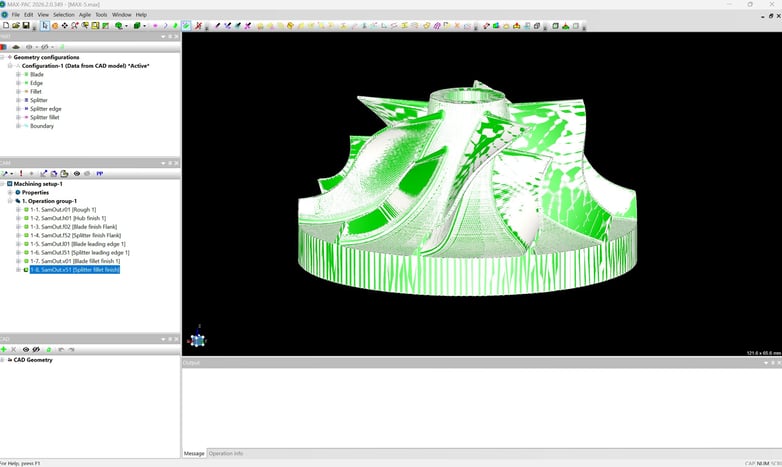 Flank finishing example in MAX-PACTM
The ability to take advantage of flank milling depends partly on decisions made during the design process. Blade geometry, tool accessibility, and allowable deviations all influence whether flank milling is a viable finishing strategy. Collaboration between CAE and CAM teams can help ensure that manufacturing requirements are considered alongside aerodynamic performance early in the design process. Utilizing tools that seamlessly connect these stages by transferring design information between CAE and CAM software supports a more integrated approach to turbomachinery design and manufacturing.
Ultimately, roughing and finishing strategies should be evaluated as parts of a connected machining process. Decisions made during roughing influence the stock conditions encountered during finishing, while finishing requirements can affect how much material must be removed in earlier operations. Evaluating these operations together helps programmers identify opportunities to reduce total machining time rather than optimizing each operation in isolation.
Balancing Toolpath Efficiency with Surface Quality and Process Reliability
Reducing machining cycle time is valuable only when the finished component continues to meet its quality requirements. For complex turbomachinery components, this means balancing machining efficiency with dimensional accuracy, surface finish, tool life, and process reliability.
Increasing feed rates, reducing the number of passes, or selecting more aggressive cutting conditions may shorten an individual operation, but these changes can also affect cutting forces, tool deflection, vibration, and surface quality. If a toolpath produces unacceptable surface characteristics or dimensional errors, the time saved during machining may be offset by additional finishing, rework, or needing to machine the component again.
This balance is particularly important when machining thin or highly curved blades. Cutting forces can cause deflection in the tool or workpiece, potentially affecting dimensional accuracy and surface finish. Tool orientation, engagement, and the amount of material remaining around the blade can all influence the stability of the cutting process.
Finishing operations present similar trade-offs. Increasing stepover can reduce the number of passes and shorten machining time, but the resulting surface must still meet the required finish specifications. Likewise, changes in tool orientation or machining direction can influence cutting conditions and the quality of the finished surface.
The objective is not simply to machine the part as quickly as possible, but to develop a toolpath that reliably produces an acceptable finished component in the shortest practical time.
Evaluating Toolpath Performance Across the Complete Machining Cycle
The impact of toolpath strategy on machining cycle time becomes clearer when the entire machining process is considered. While individual improvements in cutting speed, toolpath length, or material removal rate can be valuable, they do not always translate directly into shorter overall cycle times.
A roughing strategy that reduces cutting forces may allow higher feed rates but require a longer toolpath. A finishing strategy that increases stepover may reduce the number of passes but introduce different tool orientation or accessibility requirements. In both cases, the overall benefit depends on how these changes affect the complete operation.
Evaluating machining strategies requires considering cutting time, non-cutting movements, tool repositioning, and the machine's ability to execute the programmed path. For manufacturers machining complex impellers and blisks, understanding these relationships helps identify opportunities to reduce cycle time without compromising surface quality or process reliability.
The next step is putting these principles into practice. By applying appropriate roughing and finishing strategies within CAM software and evaluating their impact on cycle time, programmers can make more informed decisions about how to improve machining efficiency.