Why Meanline Scripting is Becoming Essential for Turbomachinery Design
Manual meanline design can sometimes feel less like design and more like managing a chain of tiny decisions.


Most programmers have worked with a toolpath that looks reasonable at first but becomes increasingly difficult to manage as programming progresses. Besides being a hassle to deal with, unnecessarily complex toolpaths create real costs in the form of delays, workarounds, rework, additional verification time, and last-minute changes on the shop floor.
When these issues surface, the programming stage often gets the blame. After all, that's where collisions are discovered, machine limitations become apparent, and manufacturing assumptions are tested against reality. But programming is rarely where the problem actually begins.
More often, programming simply reveals decisions that were made earlier during turbomachinery setup planning. Choices related to tool selection, machine access, operation sequencing, and surface requirements can either simplify the programming process or force programmers to compensate with increasingly complex toolpath strategies.
The most effective way to reduce toolpath complexity usually isn’t finding a better toolpath; it's creating a better setup plan from the start.
Most programmers don't skip setup planning. In fact, setup planning is often one of the first steps in the machining process. What naturally happens, however, is that setup decisions are made before every manufacturing constraint, tooling requirement, and machine limitation is fully understood.
As programming progresses, those early assumptions begin to get tested, and a setup that initially appeared efficient may not work as intended.
The result is a familiar cycle of downstream troubleshooting. Toolpaths are modified to avoid collisions. Operations are rebuilt when access issues are discovered. Simulations become less reliable because they no longer accurately represent the realities of the machining process.
Instead of focusing on machining strategy, programmers spend valuable time creating workarounds for decisions that were made much earlier in the workflow.
For many turbomachinery components, setup planning mistakes don't reveal themselves all at once. They emerge gradually through dozens of small adjustments that make complex parts even more difficult to manufacture.
Before selecting tools or creating operations, define the overall machining strategy for the component. Establish the coordinate systems, determine how the part will be oriented on the machine, and identify the critical areas that will drive machining decisions.
Once the machining intent is established, roughing and finishing operations can be planned as separate but connected stages. This creates an opportunity to evaluate access requirements early and determine whether critical areas can be reached without introducing unnecessary setup changes or specialized tooling later in the process.
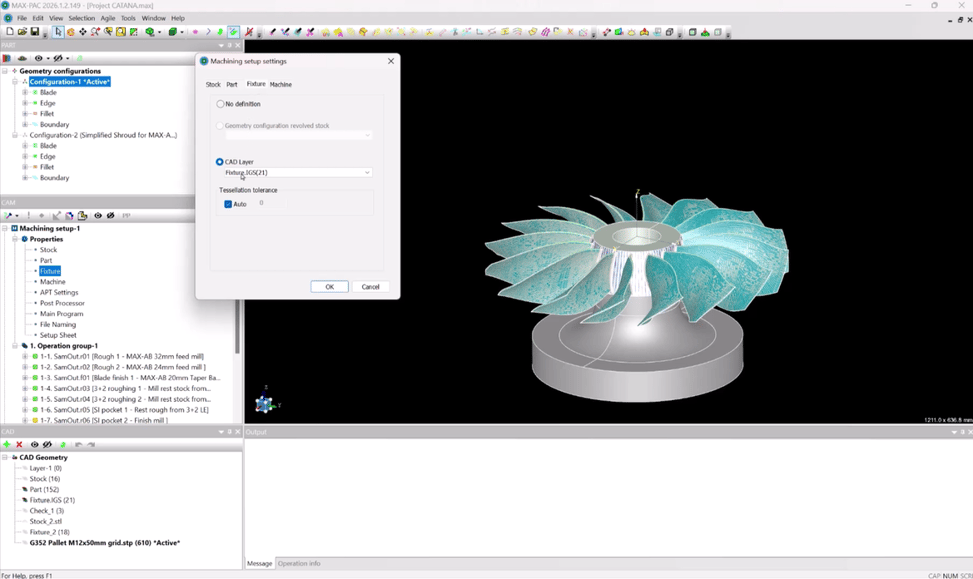 Defining the set up, work holding, and machining orientations early helps establish a setup strategy that supports the entire machining process.
One of the most valuable outcomes of setup planning is the ability to start evaluating manufacturability before significant programming effort has been invested.
For example, can the component be machined using realistic, commercially available tooling? A geometry may appear manufacturable in CAE software, but blade spacing, shroud clearances, or deep flow path features can create tooling requirements that are impractical from a rigidity, reach, or cost perspective.
Identifying those limitations early allows programmers and manufacturing engineers to adjust the process before they become true programming problems.
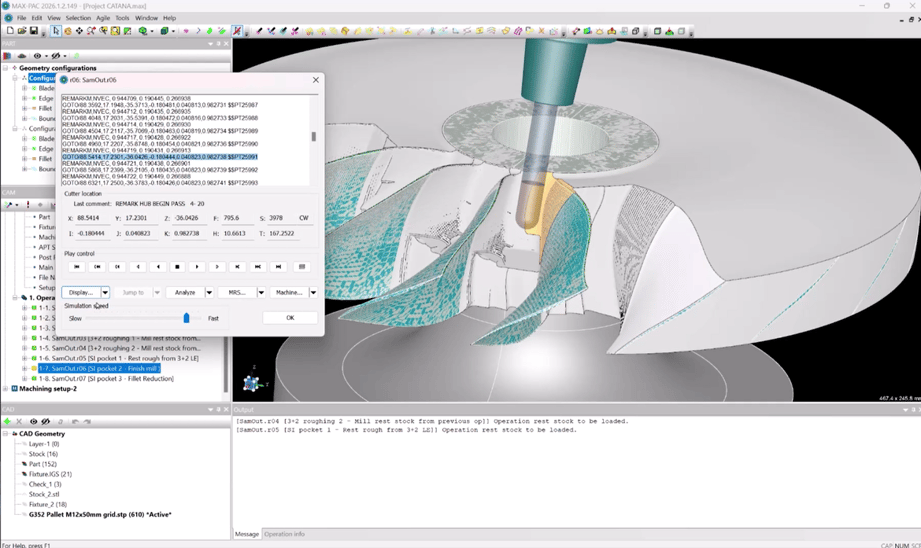 Evaluating tool reach and accessibility early can help identify manufacturability challenges before programming begins.
Once operations have been defined, toolpath analysis provides an opportunity to identify potential issues before they reach the machine. Toolpath analysis is often viewed as a programming activity, but it can also serve as a validation step for setup decisions. Issues identified here frequently trace back to choices involving machine orientation, tooling, or access planning rather than the toolpath itself.
Useful metrics to review include:
Linear axis motion
Head and table angles
Drill drag angle
Surface contact angle
Feed rate variation
Stock deviation
Most turbomachinery CAM software allows programmers to filter results and quickly identify areas that may require closer review, such as:
Regions outside the acceptable drill drag range that may indicate unfavorable roughing engagement
Axis reversals that could affect blade surface finish quality
Areas where cutting forces may become excessive and warrant more advanced force analysis using third-party solutions
Rather than treating analysis as a final verification step, use it to validate the setup strategy itself. Many programming challenges can be identified long before a simulation is run.
A well-planned setup produces more than a successful program. It creates a repeatable manufacturing process.
Documenting setup orientations, tooling selections, expected stock conditions, operation sequencing, and machining strategies makes future jobs easier to program and verify. Whether the component is repeated months later or assigned to another programmer, much of the decision-making effort has already been captured.
The result is shorter programming time, greater process consistency, and less reliance on a single programmer's experience.
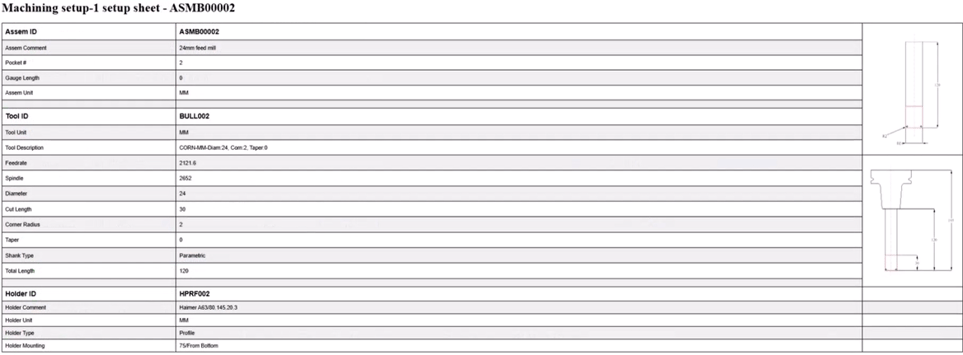 Detailed setup documentation makes repeat jobs easier to program, verify, and reproduce.
Most setup planning problems don't appear as obvious mistakes. Instead, they reveal themselves later through collision troubleshooting, operation rebuilds, unexpected machine limitations, or surface finish issues.
If you’re running into these problems over and over, it can be helpful to step back and challenge the assumptions behind the setup strategy.
Consider the following questions:
Are your coordinate systems defined by machining intent rather than simply following the model orientation?
Do roughing and finishing operations have different access requirements that aren't reflected in the setup sequence?
Can a commercially available cutting tool realistically reach the required geometry?
Is the tool rigid enough to remove material effectively and maintain the desired surface finish?
If the tool can reach the feature, does the machine have sufficient space to execute the required motions?
Could fixtures limit tool access or introduce collision risks?
Can the spindle achieve the speeds required for the selected tooling?
Will the setup support the required surface finish, even when machine vibration and dynamic behavior are considered?
Are there thin blades or flexible features that may vibrate during machining?
The goal isn't to create more planning work. It's to identify the assumptions most likely to create downstream problems. Finding those issues during setup planning is almost always easier than discovering them halfway through programming.
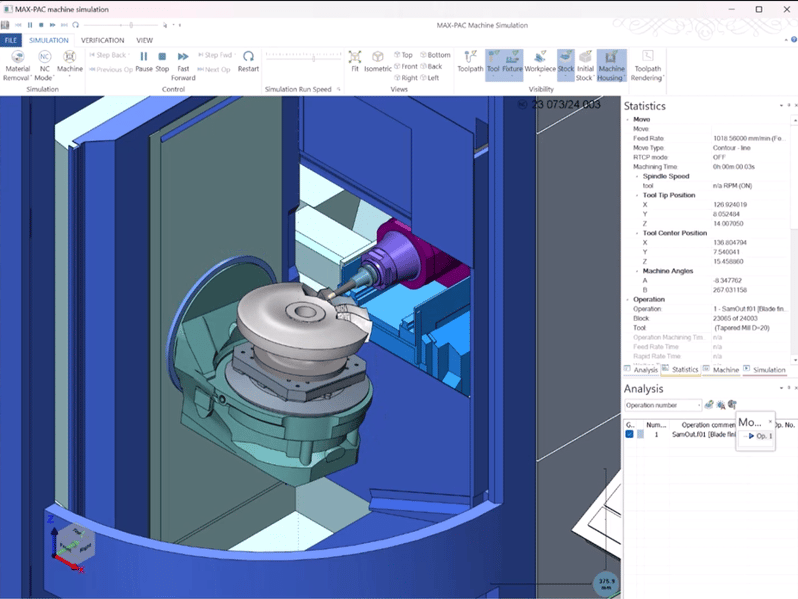 Machine simulation helps validate that the selected setup can be executed within the machine's travel limits and axis constraints.
When toolpaths become difficult to manage, it's easy to assume the problem lies in the programming stage. But in reality, many programming challenges originate much earlier.
The programmers who spend the least amount of time fixing toolpaths aren't necessarily faster at programming. More often, they've invested more effort upfront to validate assumptions, evaluate manufacturability, and create a setup plan that supports the entire machining process.
By defining machining intent early, planning for realistic tooling and machine constraints, and documenting proven processes, manufacturing teams can create more predictable outcomes and reduce the amount of troubleshooting required later.
The result isn't just simpler toolpaths. It's fewer surprises during simulation, less rework during programming, more consistent machining performance, and a process that becomes easier to repeat from one job to the next.

Tags: Software, CAM Software
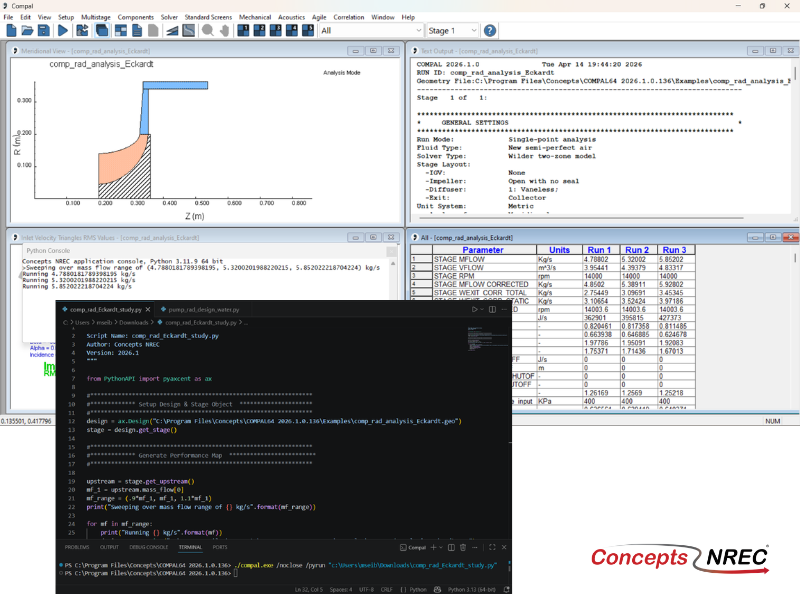
Manual meanline design can sometimes feel less like design and more like managing a chain of tiny decisions.

For most turbomachinery engineers, optimization isn’t a new idea. It’s a critical part of their workflow that can’t be overlooked. But sometimes that crucial step isn’t easy to get to.